IPTV vs. Cable TV in Canada: Pros and Cons
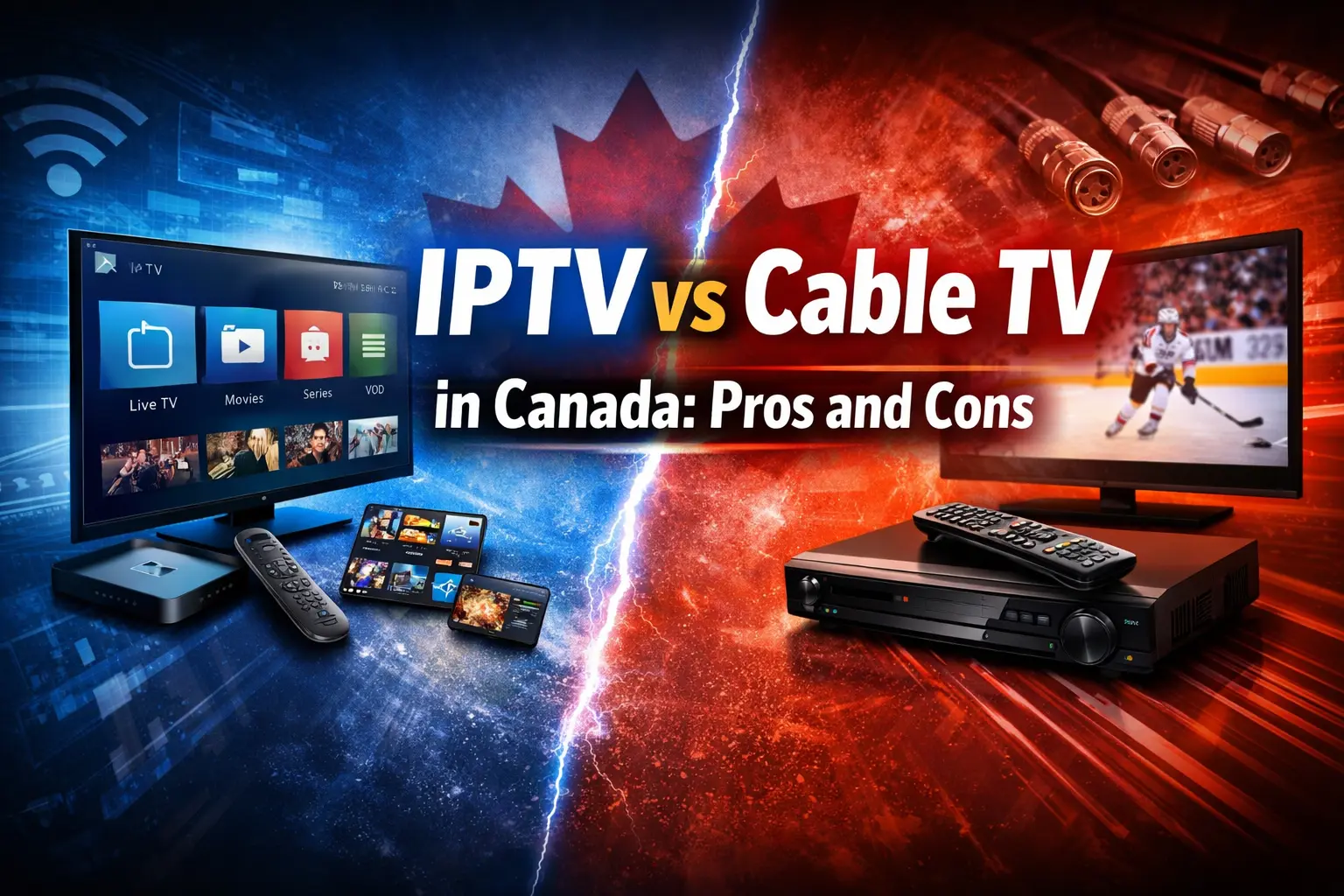
Choosing the right TV service in Canada can be confusing. Many people ask: Should I pick IPTV or cable TV? In this article, we clearly compare IPTV vs. Cable TV in Canada so you can make the best choice for your home. We will break down costs, features, quality, and overall value.
Today, more Canadians are exploring internet-based TV because it can be cheaper and more flexible than traditional TV. Still, cable TV continues to be strong in many households because it is familiar and reliable. With this guide, you will learn what each option offers and how they differ.
By the end, you should clearly understand which works better for you. We will also answer common questions Canadians ask about TV options. Based on what most people search online, the biggest concerns are about pricing, quality, and ease of use.
Before comparing the two, let’s define each one. Also, if you’re not sure what IPTV means, understanding the basic concept will help you see how it compares to cable TV.
What Is IPTV?
IPTV stands for Internet Protocol Television. It delivers TV channels and video over the internet instead of through traditional cable wires. This means you watch TV using your internet connection.
Here’s how IPTV usually works:
- A TV service sends video through the internet instead of a cable box.
- You install an app or use a small device to watch channels.
- It can include live TV, video on demand (VOD), and catch-up TV.
- Many devices support IPTV, such as:
- Smart TVs
- Amazon Fire TV
- Android boxes
- Phones and tablets
- Computers
One big benefit of IPTV is that it works on multiple devices without expensive equipment. If you already have a strong internet plan, you can start right away.
In Canada, IPTV is becoming popular because it offers more options than standard cable TV packages. You can watch channels from around the world, not just local or national ones. That is attractive to people who want international sports, foreign language channels, or specialty content.
Also, IPTV plans are flexible. Some services let you pay just for the channels you want instead of buying a large package. This can help you save money.
However, IPTV relies on your internet quality. If your connection is slow or unstable, the picture can blur or freeze. We will discuss quality more below.
Next, let’s look at what cable TV is and how it compares to IPTV.
What Is Cable TV?
Cable TV refers to television delivered through coaxial or fiber cables run into your home. Traditional providers in Canada include companies like Rogers, Bell, and Telus. They supply a box that connects to your TV and gives access to channels you subscribe to.
Key characteristics of cable TV:
- It uses a physical connection (wire) to bring TV to your house.
- You need a set-top box in most cases.
- TV channels are bundled into packages.
- Some plans include internet and phone bundled with TV.
Cable TV has been around for decades and remains popular. People like it because it rarely depends on internet quality to work. That means you usually get a stable signal with few interruptions.
In Canada, most cable TV plans come with contracts that last many months. These agreements sometimes bundle services (like internet + TV + phone). While this can bring savings if all are used, people often feel stuck if they only want TV service.
Cable TV also often includes local news and region-specific channels. This can be important to Canadians who follow local events or sports.
That said, cable TV faces criticism for its pricing. Many users feel they pay too much for channels they rarely watch. Also, traditional cable packages often lack flexibility. Unlike IPTV, you can’t always pick and choose every channel.
Now that we understand what each one is, let’s compare them in detail.
IPTV vs Cable TV: Cost Comparison
One of the biggest questions Canadians ask is: Which is cheaper — IPTV or cable TV? Costs vary, but IPTV often wins in price.
Cable TV Expenses
Most cable TV plans in Canada include:
- Monthly subscription fees
- Premium channel add-ons
- Equipment rental (set-top box)
- Installation charges
- Taxes
Typical cable TV plans can cost $50 to $150+ per month, depending on how many channels you choose. Some companies also charge fees for extra boxes in other rooms.
IPTV Fees
IPTV pricing tends to be simpler:
- Monthly fee based on channel selection
- No equipment rental in most cases
- Often no installation cost
Many IPTV services begin around $10 to $30 per month for basic channels. Higher tier plans with more channels or features may cost more. Still, total cost is often lower than cable TV.
Why IPTV Can Be Cheaper
IPTV providers do not charge for:
- Cable equipment
- Technician installation
- Long contracts
Instead, they focus on delivering TV over your internet connection. This often cuts out many hidden fees.
Real World Savings
| Service Type | Estimated Monthly Cost |
|---|---|
| Cable TV | $70 – $150+ |
| IPTV | $10 – $50+ |
Many Canadians save $30–$100 a month by switching to IPTV. Over a year, that adds up to hundreds of dollars saved.
However, remember that IPTV quality depends on your internet plan. If your internet is slow or capped, you may need to upgrade it. That cost should be considered when choosing IPTV.
Next, we examine the content available on each service.
Channel Lineup & Content Variety
When choosing TV, content matters most. You want the channels and shows that match your interests.
Cable TV Content
Cable TV packages include:
- Local and national channels
- Regional sports networks
- Specialty channels (movies, kids, news)
- Premium add-ons (HBO, etc.)
However, cable often packages channels you don’t want with ones you do. That can make the monthly cost feel higher.
IPTV Content
IPTV stands out because it offers:
- Thousands of channels from many countries
- Sports, news, entertainment, foreign language channels
- On-demand content in many services
Because IPTV isn’t limited by traditional broadcast rules, many providers include international networks that cable does not offer.
Head-to-Head
| Feature | Cable TV | IPTV |
|---|---|---|
| Local Canadian channels | ✔️ | ❓ (depends on provider) |
| International channels | ❌ | ✔️ |
| Specialty genres | Limited | Very broad |
| On-demand library | ✔️ | ✔️ |
In many cases, IPTV offers a much broader lineup, especially for international content. This is a major reason many people switch.
Cable TV still does well for local and mainstream channels. If you watch mostly Canadian and North American channels, cable is solid. But if you want variety — like European, Asian, or niche channels — IPTV often delivers more options.
IPTV vs Cable TV: Device Compatibility & Flexibility
Another big difference is how you watch.
Cable TV Devices
With cable, you usually need:
- Set-top box per TV
- Wired connection to each TV
- Option to add a second box (extra cost)
This setup ties your TV service to specific hardware.
IPTV Flexibility
With IPTV, you can watch on:
- Smart TVs
- Phones and tablets
- Streaming devices (Fire TV, Android TV)
- PCs
This means you can watch TV:
- At home
- On the go
- In different rooms without extra hardware
Because IPTV runs on apps, you don’t need a technician or special installation. You just sign in and start watching.
This flexibility is one of the biggest reasons people prefer IPTV. If you travel or watch TV on multiple devices, IPTV adapts easily.
Streaming Quality & Performance
Cable TV Quality
Cable TV uses dedicated lines to deliver your channels. This means:
- Stable picture quality
- Rare buffering
- Works even with slower internet
Cable signals are not affected by your home internet speed. That gives it an advantage in reliability.
IPTV Quality
IPTV relies on your internet speed. Good internet makes IPTV perform very well, but poor internet can cause:
- Buffering
- Pixelation
- Frame freezing
- Delayed channel changes
Many IPTV services stream in HD or 4K quality. But the experience depends on your connection.
Internet Speed Needed for IPTV
For smooth performance, you typically need:
- 25 Mbps or more for HD
- 50+ Mbps for 4K
- Lower speeds may cause buffering
If your home has many devices using the internet at once, IPTV performance can dip. This is important if your kids, roommates, or family stream, game, or upload simultaneously.
Comparing in Real Life
Cable TV often feels more reliable because it doesn’t rely on your internet. However, if you have a fast and stable connection, IPTV can match or exceed cable performance.
IPTV vs Cable TV: Contracts, Setup & Equipment
Cable TV Contracts
Cable TV often requires:
- Long-term agreements
- Cancellation fees
- Installation appointments
You may pay for equipment rental each month. This adds up.
IPTV Setup
IPTV setup is usually easy:
- Choose a provider
- Sign up online
- Install the app or use a streaming device
- Log in and start watching
There is no technician visit. There is no bulky hardware.
Flexibility
With IPTV:
- You can cancel anytime
- You can change plans quickly
- You do not pay rental fees
This makes IPTV more flexible for many people.
Pros & Cons of IPTV
Pros
- Lower cost than cable
- Huge channel variety
- Works on many devices
- Easy setup
- No equipment fees
- No long contracts
Cons
- Depends on internet speed
- Buffering with poor internet
- Local Canadian channels may not always be included
- Some providers vary in quality
In general, IPTV offers flexibility and value. However, you must ensure your internet plan can support it.
Pros & Cons of Cable TV
Pros
- Reliable picture quality
- Includes local Canadian channels
- Works even with slow internet
- Familiar to most users
Cons
- Often more expensive
- Contracts can lock you in
- Equipment rental fees
- Limited choice compared with IPTV
Cable TV continues to be strong where people value stability and local content more than variety.
Which One Should Canadians Choose?
Your choice depends on what you value most.
Choose IPTV if:
- You want lower monthly bills
- You love international channels
- You want to watch TV on many devices
- You have fast internet
Choose Cable TV if:
- You need stable quality
- You watch local Canadian channels
- You want a simple, familiar system
At the end of the day, both services deliver TV. But your internet quality, budget, and content needs should guide your decision.
IPTV vs Cable TV: FAQs
Is IPTV legal in Canada?
Yes. IPTV services can be legal if they follow Canadian broadcasting laws. Many legal IPTV services exist. Always check provider compliance.
Do I need fast internet for IPTV in Canada?
Yes. For HD or 4K IPTV, you need a good internet plan (at least 25 Mbps for HD and 50+ Mbps for 4K).
Can IPTV replace cable completely?
For many people, yes. IPTV can replace cable for most content. However, some users prefer cable for stable local channels.
Is IPTV cheaper than cable TV in Canada?
Often yes. IPTV tends to have lower monthly fees and fewer hidden costs.
Does IPTV offer local Canadian channels?
Some do, but not all. Check your provider before subscribing.
Which devices support IPTV?
Smart TVs, Firestick, Android TV, phones, tablets, and computers.
Can IPTV work without a set-top box?
Yes — usually via apps or streaming devices.
Is buffering common with IPTV?
Buffering only happens if your internet is slow or unstable.
Does cable TV have better picture quality than IPTV?
Cable often feels more stable, but IPTV can match its quality with good internet.
Can I watch IPTV outside Canada?
Yes, if your provider allows it.
Conclusion
Both IPTV and cable TV have real advantages and downsides. Choosing the right one comes down to cost, content, internet strength, and personal preference. IPTV in Canada keeps growing because it offers variety and flexibility. Cable TV remains strong for reliability and local content.